种植植物如何能打造私人游乐区?
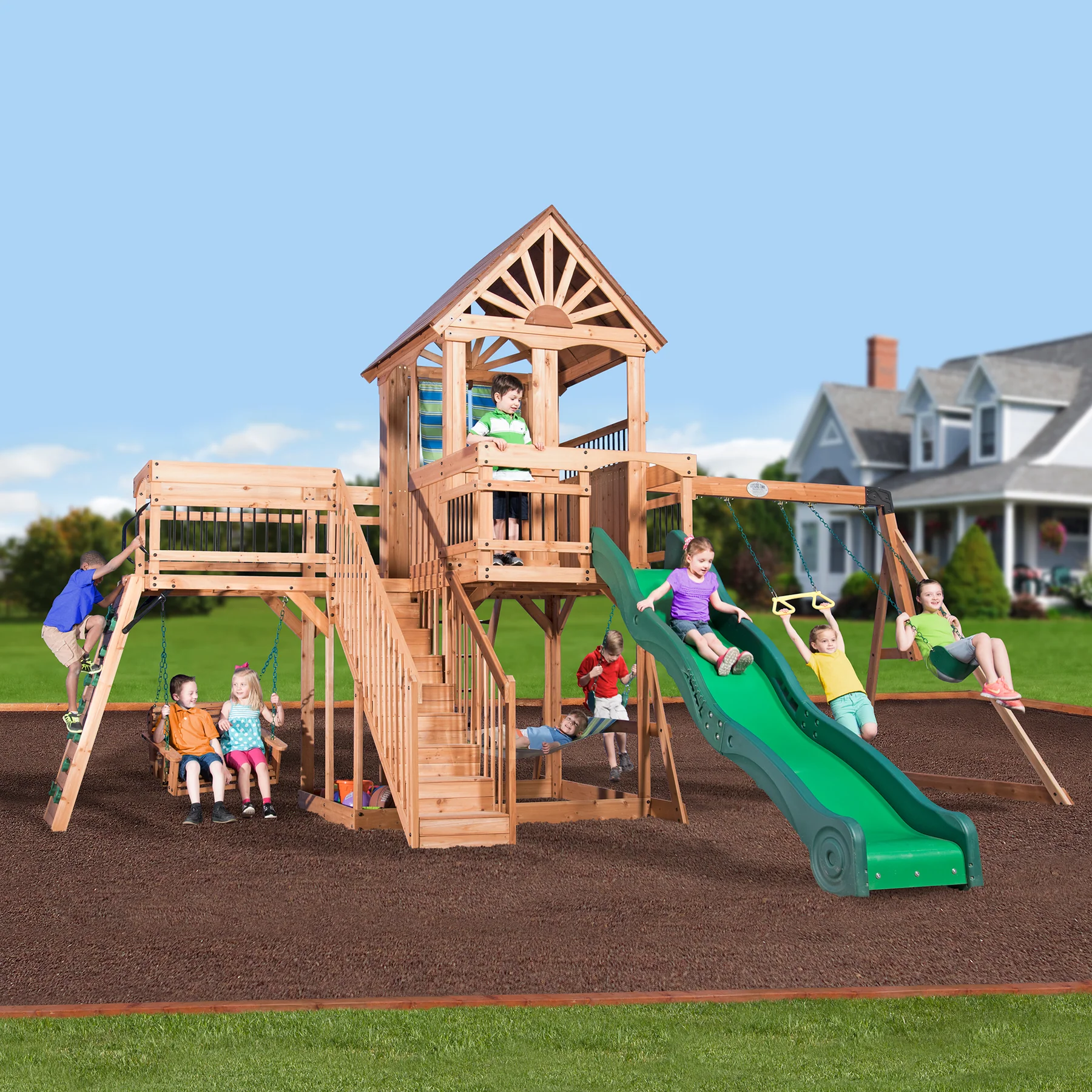
孩子们可以在优美的自然环境中尽情发挥想象力。大型木制秋千大型木制秋千架大型木制游乐场木制大秋千How can you use plants to strategically screen your play area, enhancing privacy, reducing noise, and integrating your big wooden swing set seamlessly into a greener, more secluded backyard oasis?
Moving beyond basic fencing, living screens of foliage provide dynamic benefits: they filter wind and sun, absorb sound, improve air quality, and create a habitat for birds and butterflies, enriching the play experience. The goal is to envelop the large wooden playgrounds area in a way that feels intentional and organic, not isolated or closed-off.
1、The Planning Phase: Assessing Needs and Conditions
Before selecting a single plant, conduct a site analysis.
Identify the "Why": Determine the primary goal. Is it to block a specific sightline (e.g., a neighbor's second-story window), dampen street noise, create a windbreak, or simply define the boundary of the wooden large swing zone?
2、Map Sun and Wind Patterns: Observe how sunlight and prevailing winds move across your yard. This dictates plant selection (sun-loving vs. shade-tolerant) and placement for maximum wind buffering.
3、Consider Scale and Growth Rate: Account for the mature height and width of plants to avoid future overcrowding or root interference with the big wooden swing set's foundation. Balance fast-growing fillers with slower-growing, long-term structural plants.
Strategic Planting Techniques for a Layered Screen
The most effective natural screens use a multi-layered approach, combining plants of different heights and textures.
1. The Tall Canopy Layer (Backbone Privacy)
This layer forms the primary visual barrier.
Evergreen Trees: For year-round privacy, consider columnar evergreens like Italian Cypress, Emerald Green Arborvitae, or Sky Pencil Holly. Planted in a staggered row, they create a dense, tall screen without excessive width.
Fast-Growing Deciduous Trees: For quicker, seasonal screening, Hybrid Poplars or Willows are effective, though they can be messy. Bamboo (choose clumping, non-invasive varieties like Fargesia) provides a stunning, modern screen with sound-dampening qualities but requires root barrier installation.
2. The Mid-Height Shrub Layer (Softening & Filling)
This layer adds density, texture, and color beneath the canopy.
Flowering Shrubs: Lilac, Forsythia, or Hydrangea add seasonal blooms and fragrance.
Broadleaf Evergreens: Holly, Rhododendron, or Mountain Laurel provide solid, year-round structure and often beautiful flowers.
3. The Low Border & Ground Layer (Definition and Safety)
This final layer defines the play zone's edge and can enhance safety.
Low Hedges: Boxwood or Dwarf Yaupon Holly can create a formal, clean border that subtly signals the transition into the large wooden swing area without blocking sightlines for supervision.
Soft, Durable Groundcovers: Planting clover, dwarf mondo grass, or creeping thyme around the perimeter can handle light foot traffic, reduce mud, and create a soft, lush frame.
Integrating the Play Structure with the Planting Plan
The planting should enhance, not hinder, the playset.
Frame, Don't Encase: Position taller plants at the corners or along the back of the large wooden playgrounds area, framing it like a stage set. Avoid planting dense shrubs directly under swings or slides where they could become a tripping hazard or obstruct the critical fall zone.
Create "Green Walls": Train climbing plants like Clematis, Star Jasmine, or Climbing Roses on a trellis panel positioned between the play area and the property line. This adds a vertical layer of screening without taking up much ground space.
Mind the Roots: Always plant trees and large shrubs a safe distance from the wooden large swing set's structural posts and footings to prevent root interference. A good rule is to plant no closer than the tree's expected mature canopy radius.
户外空间